
Substation Transformers
Substation transformers are heavy-duty electrical components designed to change voltage levels within a power grid, enabling efficient long-distance transmission and safe local distribution. Typically classified by function, such as transmission (high to medium voltage) or distribution (medium to low voltage), they are robustly designed to withstand high electrical loads and harsh environmental conditions.
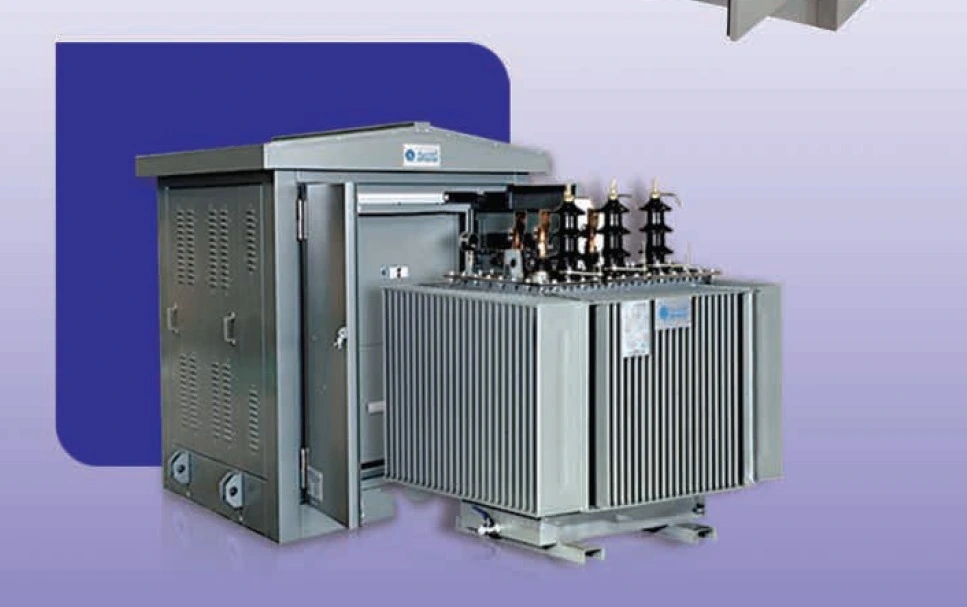
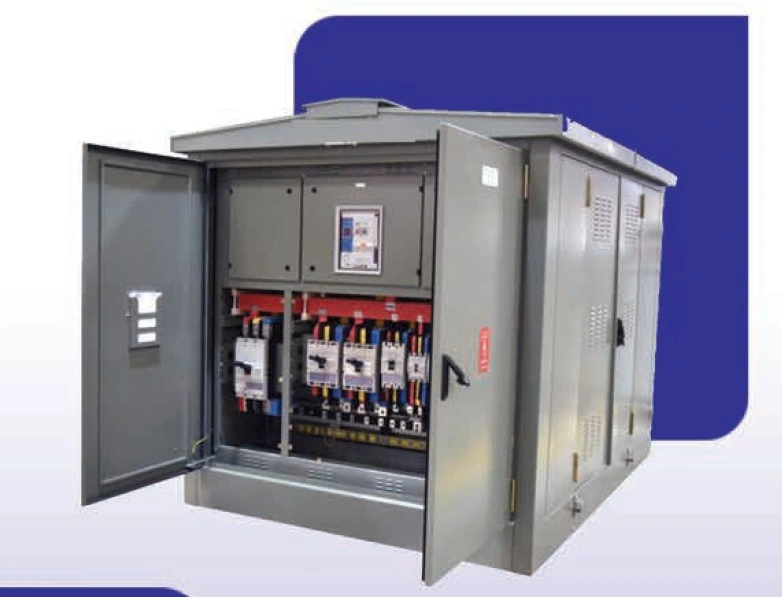
Main types of substation transformers
Power transformers: Used at high-voltage transmission levels (typically 66 kV to 765 kV) to step up the voltage for long-distance power transmission or step down for regional distribution.
Distribution transformers: Placed near end users to convert medium distribution voltages to standard low voltages for homes and businesses.
Measurement transformers: Specialized units, including current transformers (CTs) and voltage transformers (VTs), used to measure and monitor network parameters rather than change the main power levels.
Specialized transformers: These include rectifiers for converting AC to DC (common in high-voltage DC transmission systems) and phase-change transformers for controlling power flow angles in complex networks.
Key design and cooling features:
Insulation medium: Most units are oil-immersed, using mineral oil or biodegradable ester oil (such as FR3) for superior cooling and insulation. Dry units use air or resin and are preferred for indoor or fire-prone environments.
Cooling Methods:
ONAN/ONAF: Natural circulation of oil with natural air (ONAN) or forced air from fans (ONAF).
OFAF/ODAF: Use of pumps to drive or direct oil flow to maximize heat dissipation in high-capacity units.
Buildings: Act as insulated conduits for high-voltage lines. They can be mounted on top to provide sufficient electrical space, or on the side for connection to switchgear via air terminals.
Monitoring Devices: Essential for reliability, they feature gauges for oil level and coil temperature, and surge relays to detect internal faults.
Automatic Transfer Switch (ATS)
An automatic transfer switch (ATS) is an intelligent power management device that automatically switches the load between the primary power source (electricity grid) and the backup power source (generator/inverter) during a power outage. This switch ensures near-continuous and safe power continuity by detecting faults, starting the generator, and transferring power within seconds.
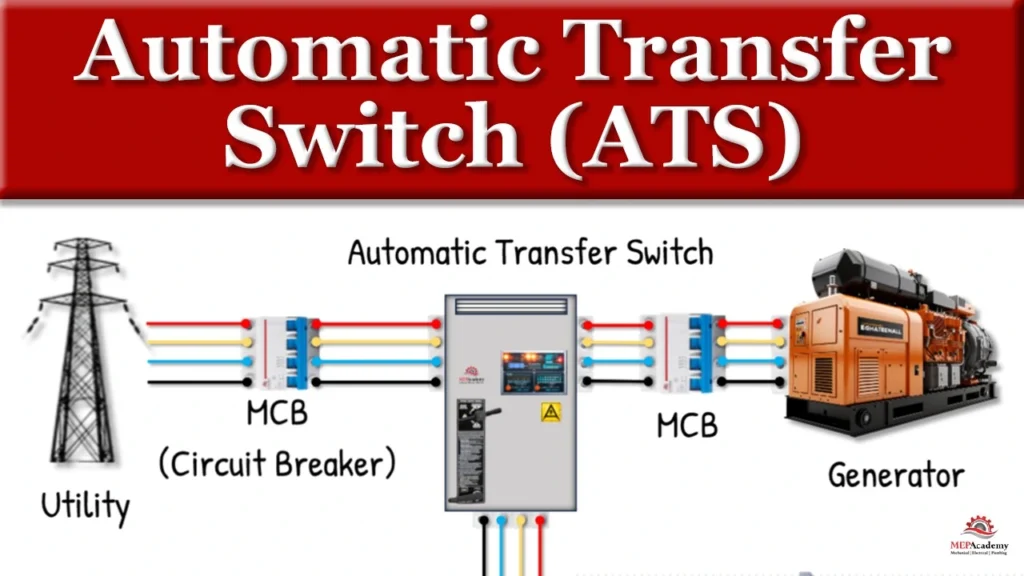
Key aspects of automatic transfer switches
Purpose: Ensures a continuous power supply to critical equipment (hospitals, data centers, homes) by managing the switching process between power sources.
Operation: Monitors voltage and frequency. In the event of a power outage on the main grid, the Automatic Transfer Switch (ATS) disconnects the main power supply and connects the backup power source. When the main power supply is restored, the system returns to its original state.
Safety: Automatic Transfer Switches (ATS) prevent the “feedback” phenomenon by ensuring that the primary and backup power sources are not connected simultaneously.
Components: Includes a controller (typically microprocessor-based) and a switching mechanism, often compliant with IEC 60947-6-1.
Types: Available for a variety of applications, from home backup generators (such as Kohler generators) to high-current industrial distribution panels, including, for example, products from Schneider Electric and Jia Electrical Equipment Supply.
Key Benefits: Automation: Eliminates the need for manual operation during power outages.
Reliability: Provides instant, reliable, and safe switching, often in less than one second.
Protection: Protects sensitive equipment by verifying the stability of the secondary power source before switching, e.g., the generator.
Ring Main Uniat (RMU)
A ring main unit (RMU) is a compact, factory-assembled electrical distribution panel encased in a metal casing, used in medium-voltage distribution networks (typically 12 to 36 kV) to enhance network reliability. This unit acts as a node in a ring network, allowing power to be supplied from two directions, thus ensuring continuity of current in the event of a cable failure. These units are commonly used for transformer protection and are often insulated with sulfur hexafluoride (SF6) gas.
Key Features
Construction: Consists of switches and circuit breakers (or fuses) within a compact, often hermetically sealed, cabinet.
Applications: Ideal for indoor/outdoor secondary power distribution, substations, and industrial areas.
Protection: Provides a high level of safety and allows for easy maintenance.
Operating Conditions: Designed to withstand high voltage (up to) and high current, typically up to 630 amps, with specific short-circuit protection capabilities.
Smart Technology: Modern RMUs (such as the Schneider Electric Smart RMU) incorporate sensors for real-time monitoring and fault detection.
Common Types:
Gas-insulated: The most widely used type, safe for harsh environments thanks to SF6 gas, according to Chint Global and Alfanar.
Oil-insulated: An older and less common type.
Key Advantages:
Reliability: Enables rapid fault identification without a complete network shutdown.
Compact Size: Significantly smaller footprint than conventional substations.
Low Maintenance: Hermetically sealed design protects against environmental factors.
Electrical Switchgear Room
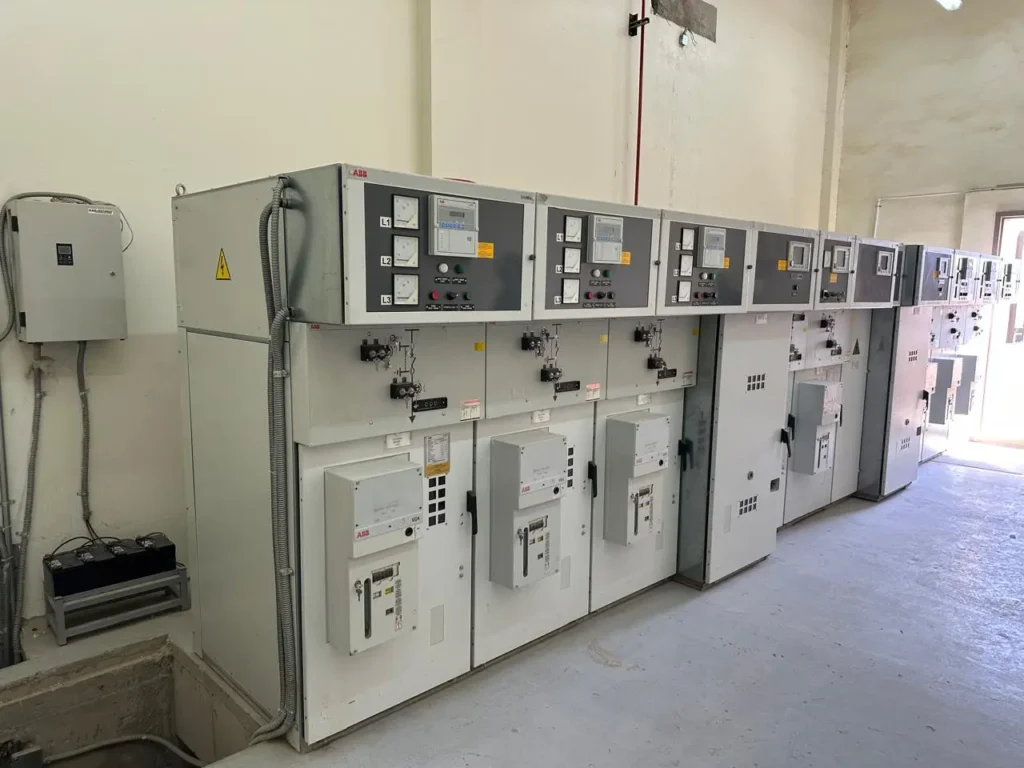
Electrical distribution switchgear room: Distribution switchgear is a centralized collection of circuit protection and control devices – such as circuit breakers, fuses, and switches – housed in metal structures used to manage, protect, and isolate electrical equipment.
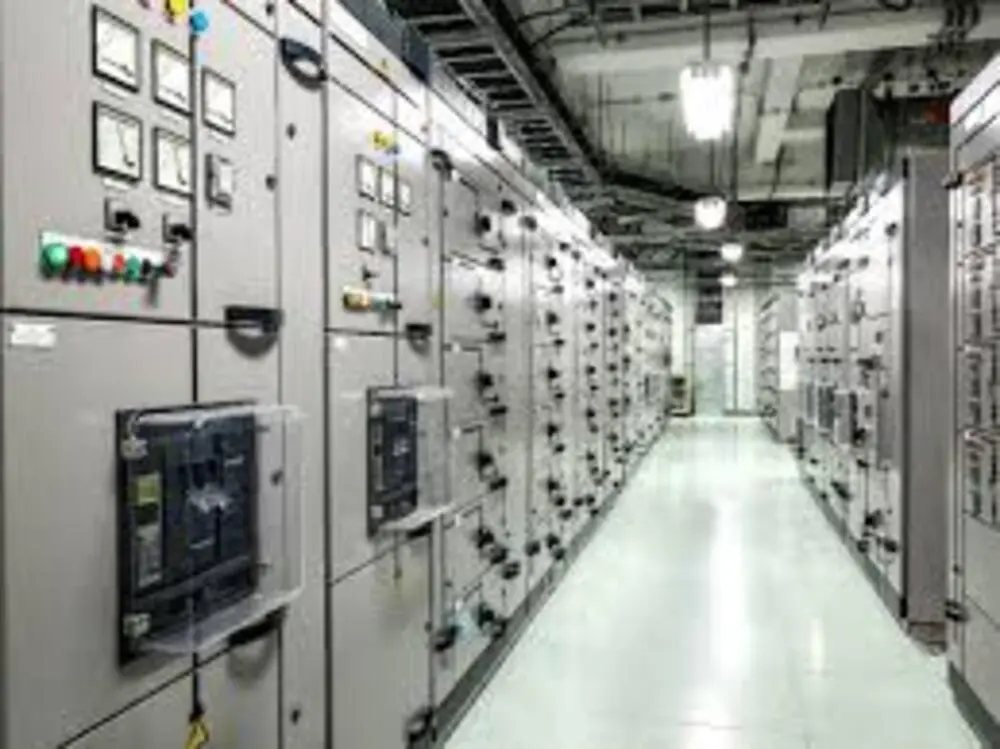
Basic functions
Electrical distribution panels act as a “controller” and “guardian” for the power system.
Protection: Electrical distribution panels detect abnormal conditions such as short circuits or overloads and quickly cut off the current to prevent damage to expensive equipment such as transformers and motors.
Isolation: They allow operators to safely disconnect power to specific parts of the electrical grid for maintenance or repairs without shutting down the entire system.
Control: They provide a means to manually or automatically switch circuits on and off to manage the flow of electricity across different sections of a facility.
Common Types by Voltage: Electrical distribution panels are primarily classified by the voltage they are designed to handle:
Low Voltage (LV): Operates at levels up to 1000 V (1 kV). Common in residential buildings, offices, and small industrial facilities.
Medium Voltage (MV): Handles voltages between 1 kV and 36 kV. This forms the backbone of many factories, hospitals, and regional distribution networks.
High Voltage: Designed to operate at voltages higher than 36 kV. These systems are essential for long-distance power transmission and for moving large amounts of power from power plants.
Main Components
Circuit Breakers: The primary device that automatically cuts off the power supply when a fault occurs.
Protective Relays: “Smart sensors” that monitor parameters (such as current and voltage) and send a signal to the breaker to trip upon detecting any fault.
Buffer Buses: Heavy-duty copper or aluminum busbars used to connect and distribute the main power supply within the array.
Measuring Transformers: Devices that reduce high voltage or current levels to safe values for monitoring and measurement.
